


Choosing the correct helmet size is essential for comfort, stability, and proper protection while riding. A helmet that is too loose may move around or fail to stay securely positioned, while one that is too tight can cause discomfort during longer rides. Measuring your head correctly before selecting a helmet size helps you find a secure and comfortable fit. The process is simple: use a soft measuring tape to measure the circumference of your head at the widest point, typically just above your eyebrows and around the back of your head. Compare the measurement with the helmet manufacturer’s size chart to select the appropriate size.
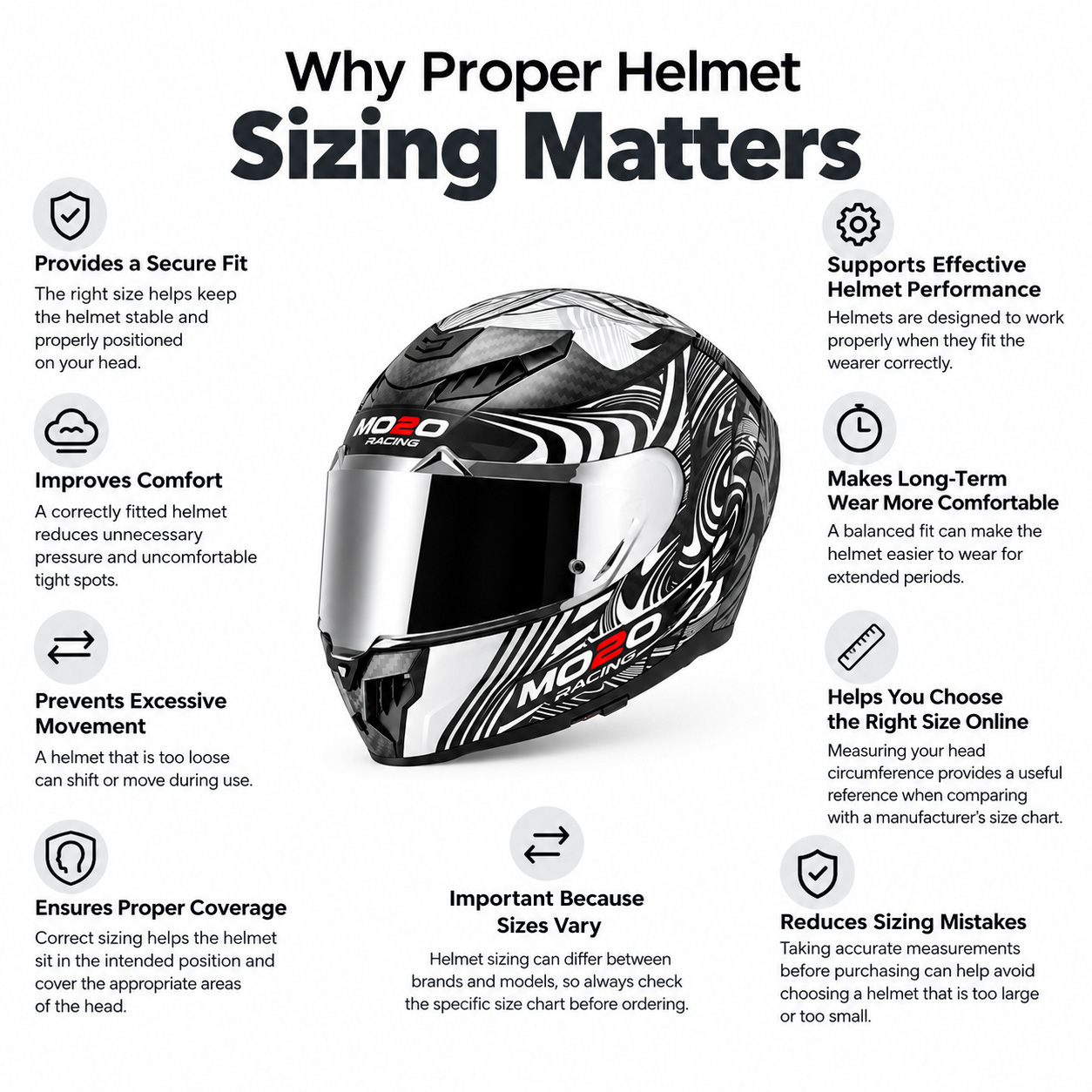
Why Proper Helmet Sizing Matters
-
Provides a secure fit: The right size helps keep the helmet stable and properly positioned on your head.
-
Improves comfort: A correctly fitted helmet reduces unnecessary pressure and uncomfortable tight spots.
-
Prevents excessive movement: A helmet that is too loose can shift or move during use.
-
Ensures proper coverage: Correct sizing helps the helmet sit in the intended position and cover the appropriate areas of the head.
-
Supports effective helmet performance: Helmets are designed to work properly when they fit the wearer correctly.
-
Makes long-term wear more comfortable: A balanced fit can make the helmet easier to wear for extended periods.
-
Helps you choose the right size online: Measuring your head circumference provides a useful reference when comparing measurements with a manufacturer’s size chart.
-
Reduces sizing mistakes: Taking accurate measurements before purchasing can help avoid choosing a helmet that is too large or too small.
-
Important because sizes vary: Helmet sizing can differ between brands and models, so always check the specific size chart before ordering.

Common Helmet Measuring Mistakes to Avoid
When measuring your head for a helmet, small errors can lead to an incorrect size and an uncomfortable or insecure fit. Avoid these common mistakes:
-
Measuring too loosely: Keep the measuring tape comfortably against your head without leaving extra space.
-
Measuring in the wrong position: Place the tape around the widest part of your head, usually about 1–2 cm above your eyebrows and just above your ears.
-
Holding the tape at an angle: Make sure the tape stays level and parallel to the ground all the way around your head.
-
Using an inaccurate measuring tool: Use a flexible tailor’s measuring tape for a more precise measurement.
-
Measuring over thick hair or headwear: Measure directly around your head rather than over a hat, cap, or bulky hairstyle.
-
Relying on your usual helmet size: Helmet sizing can vary between brands and models, so always compare your measurement with the manufacturer’s size chart.
-
Measuring only once: Take the measurement two or three times and use the most consistent result.
-
Choosing a size based only on comfort: A helmet should feel snug and secure without causing painful pressure points.

Helmet Fit and Comfort Tips
After measuring your head circumference and selecting the correct helmet size, it is important to check how the helmet fits. A properly fitted helmet should feel secure without causing unnecessary pressure or discomfort.
-
Choose the correct size: Use your head measurement and the manufacturer’s size chart to select the appropriate helmet size.
-
Ensure a snug fit: The helmet should fit firmly around your head without feeling painfully tight.
-
Check for movement: Gently shake or move your head. The helmet should stay in place without sliding excessively.
-
Avoid pressure points: Make sure there are no areas where the helmet creates uncomfortable or painful pressure.
-
Check the forehead position: The helmet should sit securely and comfortably on your head without being positioned too far back.
-
Secure the chin strap: Adjust the strap so it holds the helmet firmly while still allowing comfortable movement.
-
Consider hair and headwear: Measure and try the helmet with the hairstyle or thin head covering you normally use, as these can affect the fit.
-
Allow for padding: Helmet padding may compress slightly with use, but the helmet should already feel secure when new.
-
Test before extended use: Wear the helmet for several minutes to check for discomfort or pressure points before using it for longer periods.
-
Replace an unsuitable helmet: If the helmet remains loose, causes persistent discomfort, or cannot be adjusted properly, choose a different size or model.
1. How do I measure my head for a helmet?
Use a soft measuring tape to measure around the widest part of your head, about 1–2 cm above your eyebrows and just above your ears. Keep the tape level and snug, but not tight.
2. What measurement should I use to choose my helmet size?
Use your head circumference measurement in centimeters or inches and compare it with the manufacturer’s helmet size chart. Size ranges can vary between brands and helmet models.
3. Should I measure my head with my hair included?
Measure your head as you normally wear it under the helmet. Avoid hairstyles that significantly change your head shape or add extra bulk.
4. What if my head measurement falls between two helmet sizes?
Check the specific brand’s size chart first. If you are between sizes, the helmet’s fitting guidance should determine which size is appropriate.
5. How tight should a properly fitted helmet feel?
A properly fitted helmet should feel snug and secure without causing painful pressure. It should sit firmly on your head without moving excessively when you shake or turn your head.
6. Where should the helmet sit on my head?
The helmet should sit level on your head, covering the appropriate areas according to its design. It should not be tilted significantly backward or positioned too low over your eyes.
7. Can I use my hat size to determine my helmet size?
Hat size can provide a rough reference, but it should not replace an actual head measurement. Helmets require a more precise fit for proper positioning and stability.
8. How often should I measure my head for a helmet?
Measure again when buying a new helmet, especially for children or if your head size or shape may have changed. Always follow the sizing instructions provided with the helmet.
9. Does helmet size differ between brands?
Yes. Helmet sizing can vary by brand, model, shape, and intended use. Always check the specific manufacturer’s size chart rather than relying only on a size label such as M or L.
10. How can I tell if my helmet is too large?
A helmet may be too large if it moves noticeably on your head, shifts when you move, or cannot maintain a secure position even after the retention system is properly adjusted.
11. Can I measure my head without a measuring tape?
Yes. You can use a piece of string or flexible strip of paper around your head, mark where it meets, and then measure that length with a ruler or straight measuring tape.
12. Why is accurate helmet sizing important?
Accurate sizing helps the helmet sit correctly and remain stable during use. A helmet that is too loose or improperly positioned may not provide the intended level of protection.
Measuring your helmet size correctly is an important step toward achieving a safe, comfortable, and secure fit. Use a soft measuring tape to measure the circumference of your head at the widest point, then compare the measurement with the manufacturer’s size chart. The helmet should fit snugly without causing uncomfortable pressure, and it should remain stable when you move your head. Always check the specific brand’s sizing guide, as measurements can vary between manufacturers.