


Racing boots are designed to provide more than basic foot protection. Their taller construction extends protection upward from the ankle to the lower leg, helping shield the shin from impacts, abrasion, and contact with the motorcycle or track surface. The shin is particularly important because it is exposed during a crash and can experience significant forces when a rider falls or the leg contacts another object. By incorporating reinforced shin areas, rigid panels, and structured support, higher racing boots help distribute impact forces over a larger area rather than concentrating them on one vulnerable point. Understanding how shin armor works and why racing boots extend higher can help riders choose footwear that offers the right balance of protection, mobility, and riding performance.
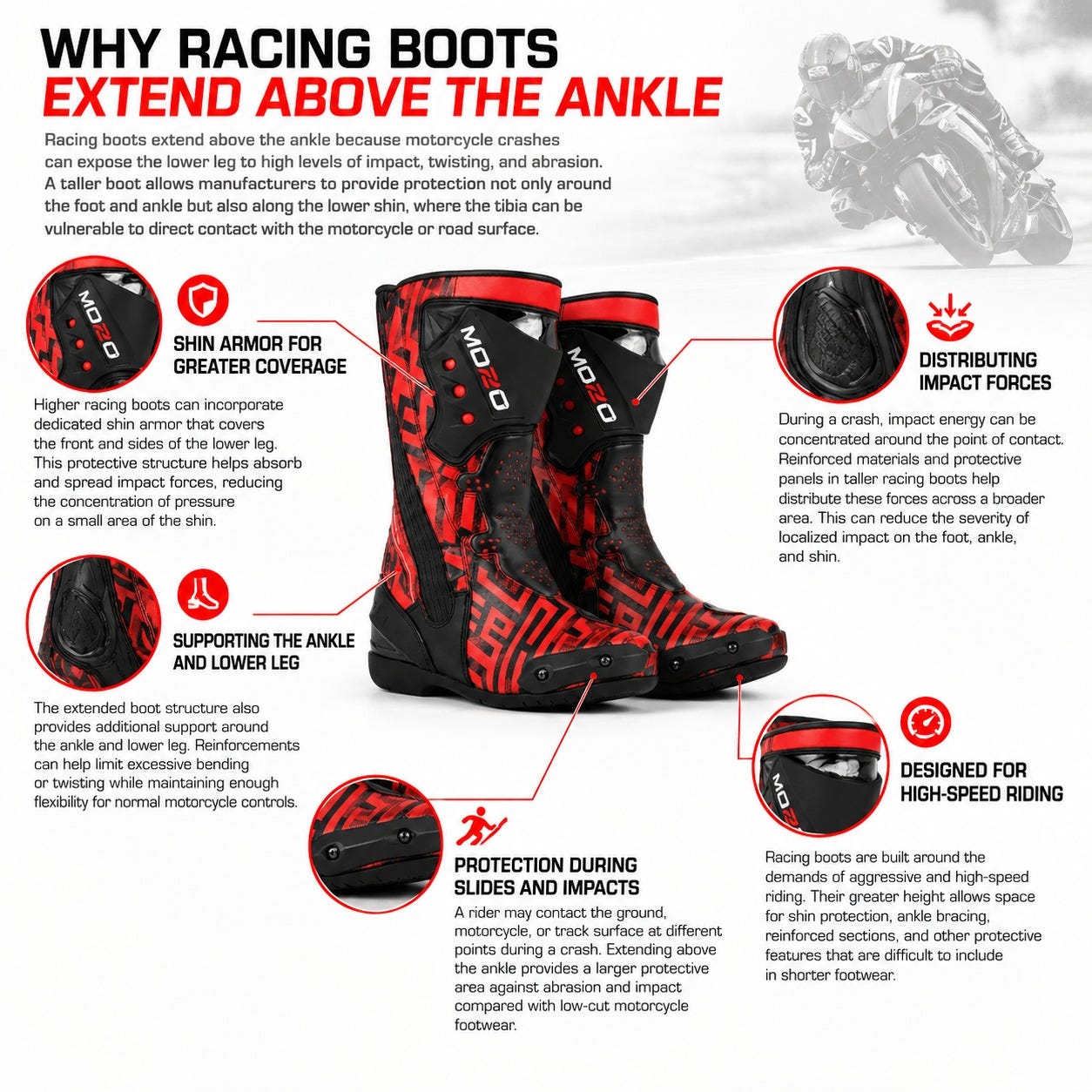
Why Racing Boots Extend Above the Ankle
Racing boots extend above the ankle because motorcycle crashes can expose the lower leg to high levels of impact, twisting, and abrasion. A taller boot allows manufacturers to provide protection not only around the foot and ankle but also along the lower shin, where the tibia can be vulnerable to direct contact with the motorcycle or road surface.
Shin Armor for Greater Coverage
Higher racing boots can incorporate dedicated shin armor that covers the front and sides of the lower leg. This protective structure helps absorb and spread impact forces, reducing the concentration of pressure on a small area of the shin.
Distributing Impact Forces
During a crash, impact energy can be concentrated around the point of contact. Reinforced materials and protective panels in taller racing boots help distribute these forces across a broader area. This can reduce the severity of localized impact on the foot, ankle, and shin.
Supporting the Ankle and Lower Leg
The extended boot structure also provides additional support around the ankle and lower leg. Reinforcements can help limit excessive bending or twisting while maintaining enough flexibility for normal motorcycle controls.
Protection During Slides and Impacts
A rider may contact the ground, motorcycle, or track surface at different points during a crash. Extending above the ankle provides a larger protective area against abrasion and impact compared with low-cut motorcycle footwear.
Designed for High-Speed Riding
Racing boots are built around the demands of aggressive and high-speed riding. Their greater height allows space for shin protection, ankle bracing, reinforced sections, and other protective features that are difficult to include in shorter footwear.
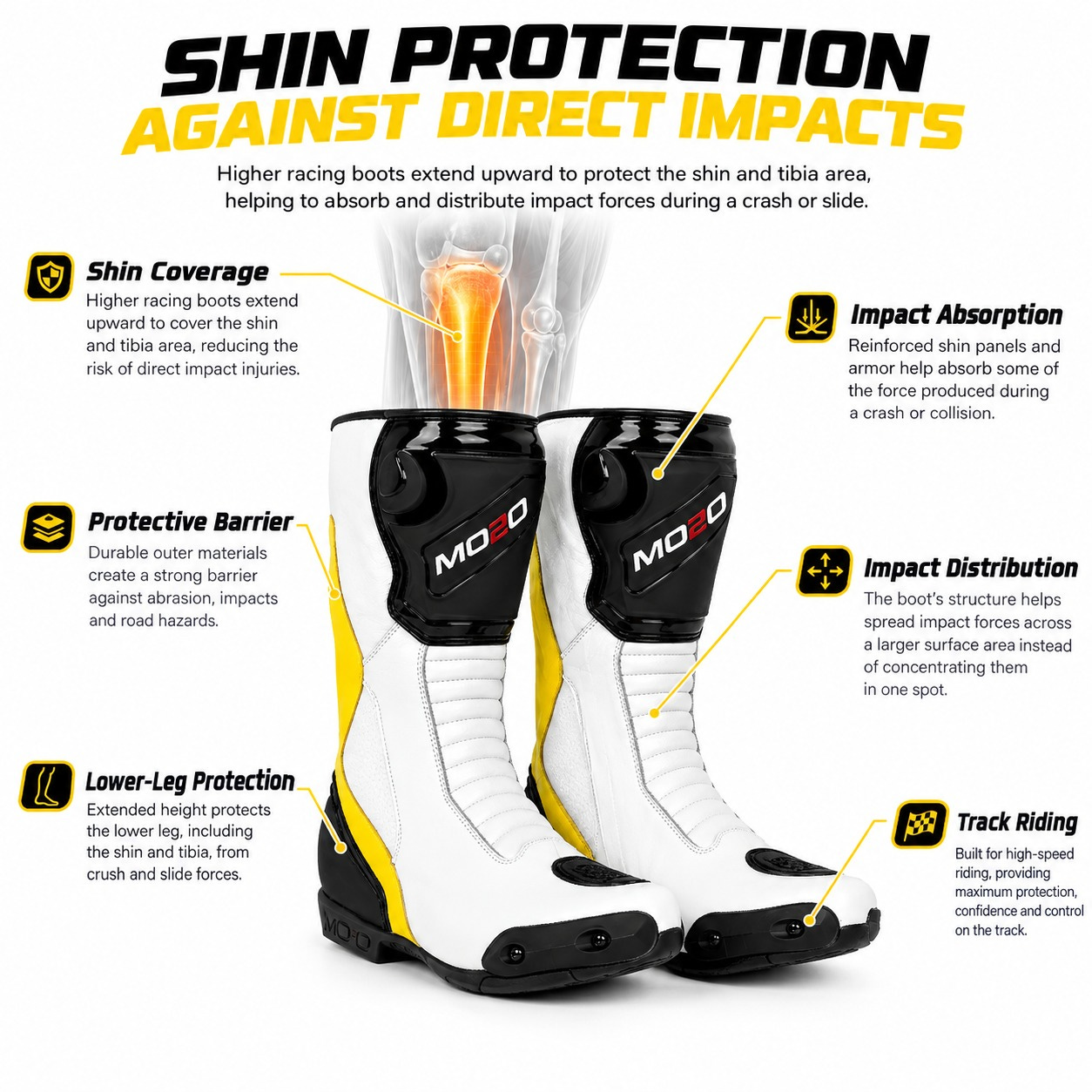
Shin Protection Against Direct Impacts
-
Covers the Shin Area: Higher racing boots extend upward to protect the vulnerable shin and tibia area.
-
Absorbs Impact Forces: Reinforced shin panels or armor help absorb some of the force produced during a crash.
-
Spreads Impact: Protective sections distribute impact across a larger area instead of allowing force to concentrate on one point.
-
Reduces Direct Contact: The boot creates a protective barrier between the rider’s leg and the motorcycle, ground, or other objects.
-
Supports Lower-Leg Protection: Shin armor works together with ankle, heel, and foot protection to provide more complete coverage.
-
Useful for Track Riding: Higher protection is particularly valuable during high-speed riding, where crashes can expose the lower leg to significant impact forces.

How Shin Armor Helps Distribute Impact Forces
-
Spreads Impact: Shin armor distributes the force of an impact across a larger area instead of concentrating it on one point.
-
Protects the Tibia: The reinforced shin section helps shield the tibia from direct contact with the ground, motorcycle, or other objects.
-
Reduces Direct Pressure: Protective panels can reduce the amount of concentrated pressure reaching the lower leg during a crash.
-
Provides Extended Coverage: Higher racing boots protect the area between the ankle and lower shin that shorter boots may leave exposed.
-
Works With Ankle Protection: Shin armor works together with ankle, heel, and foot reinforcements to provide more continuous lower-leg protection.
-
Maintains Armor Position: A properly fitted boot helps keep the shin protector aligned with the leg during riding and impact.
-
Supports Lower-Leg Stability: The higher construction can also help stabilize the ankle and lower leg during aggressive riding movements.

Impact Distribution and Injury Prevention
-
Spreads Impact Forces: Shin armor helps distribute the force of an impact over a wider area instead of concentrating it on one part of the leg.
-
Protects the Shin: Extended racing boots cover the tibia, helping protect this exposed area from direct contact with the ground or motorcycle.
-
Reduces Localized Pressure: Reinforced panels can reduce the amount of force placed on vulnerable areas during an impact.
-
Supports the Ankle: A taller boot provides additional structure around the ankle, helping limit excessive movement during a crash.
-
Provides Continuous Coverage: Higher boots create a protective zone that extends from the foot and ankle toward the lower shin.
-
Helps During Sliding: Durable outer materials and protective components can help shield the lower leg when a rider slides across the track surface.
-
Improves Overall Protection: Combining shin armor, ankle reinforcement, and a supportive boot structure provides more comprehensive lower-leg protection for racing.

Why do racing boots extend higher than regular motorcycle boots?

Racing boots extend higher to provide additional protection to the ankle, lower shin, and surrounding areas. The taller design helps cover more of the leg against impacts, abrasion, and twisting forces during a crash.
-
How does shin protection help during a motorcycle crash?
Shin protection helps distribute impact forces across a larger area instead of concentrating them on one part of the leg. This can reduce the amount of direct force reaching the shin and lower leg.
-
Why is impact distribution important in racing boots?
Impact distribution helps spread crash forces through protective materials and structural components. By reducing concentrated pressure at one point, the boot can provide more effective protection against impacts.
-
Do higher racing boots protect the ankle better?
Yes. Higher racing boots generally provide more coverage around the ankle and lower leg than low-cut motorcycle footwear. Many racing designs also use reinforced ankle areas to improve stability and protection.
-
Can tall racing boots help prevent ankle twisting?
They can help limit excessive ankle movement when properly fitted. Reinforced structures, ankle supports, and rigid components are commonly used to provide additional stability during riding and crashes.
-
Are shin guards in racing boots necessary for track riding?
Shin protection is particularly useful for track riding because riders may experience higher speeds, aggressive riding positions, and greater crash forces. Boots with appropriate shin and lower-leg coverage can provide an additional layer of protection.
-
Do higher racing boots affect riding comfort?
They can feel more structured than regular motorcycle footwear because of their protective components. However, a properly fitted racing boot should allow necessary ankle and foot movement while maintaining secure support.
-
What should riders look for in shin protection?
Look for durable construction, secure fit, adequate shin coverage, ankle support, and recognized protective certification. The protection should remain correctly positioned while the rider is seated and moving on the motorcycle.

Racing boots extend higher on the leg because protection needs to cover more than just the foot and ankle. The added height helps protect the shin, supports impact distribution, and keeps protective elements properly positioned during aggressive riding or a crash. A higher boot can also provide greater stability around the ankle and lower leg, reducing unwanted movement. For track and performance riding, choosing racing boots with adequate shin coverage, secure fastening, and proper protective construction can provide a better balance of safety, stability, and riding performance.