


Choosing the right track boots is essential for rider safety and control. Key features such as ankle protection armor and grippy soles help protect your feet while providing stability and confidence on the bike.
Why Track Boots Matter for Rider Protection
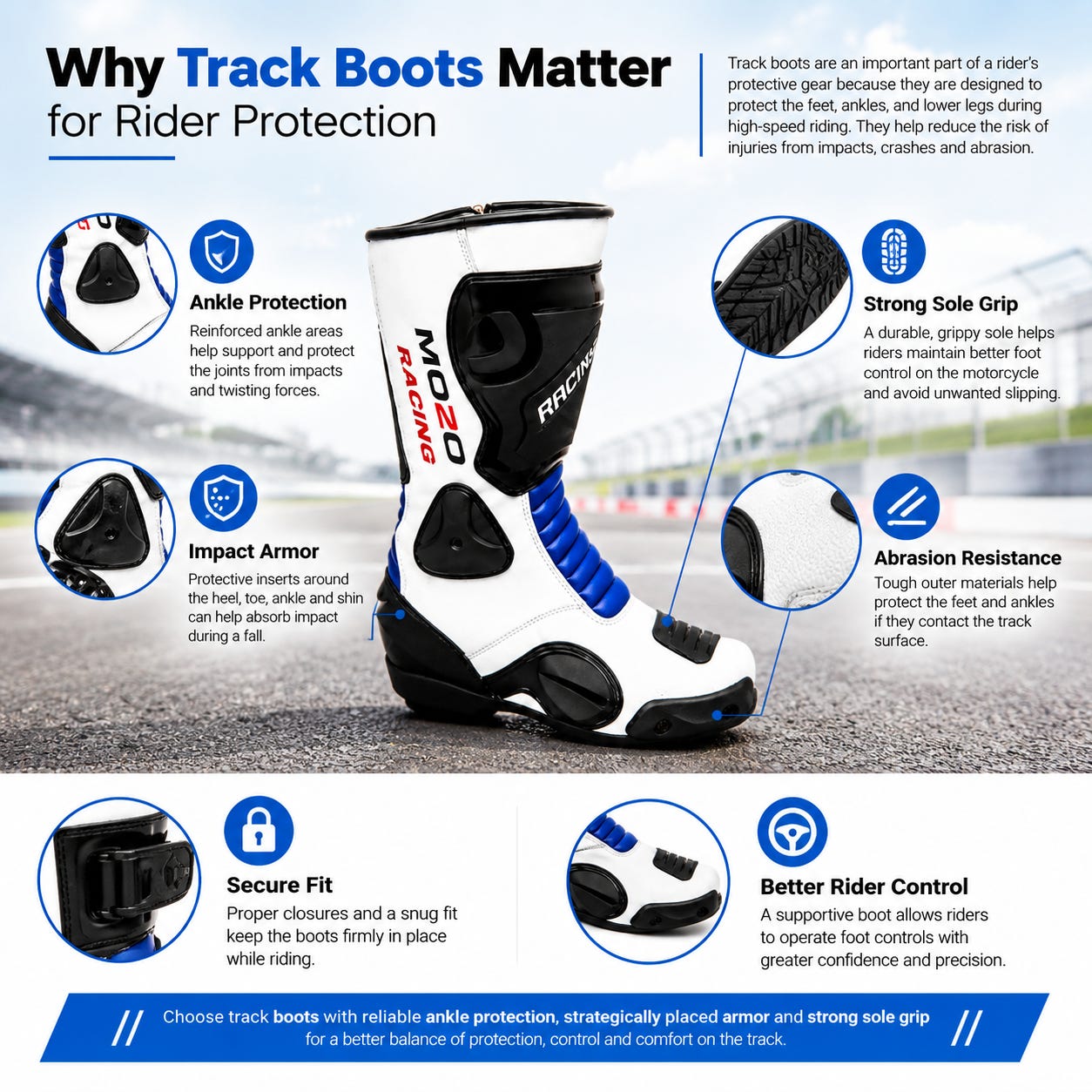
Track boots are an important part of a rider’s protective gear because they are designed to protect the feet, ankles, and lower legs during high-speed riding. Unlike regular footwear, track boots provide reinforced construction and protective features that help reduce the risk of injuries from impacts, crashes, and abrasion.
-
Ankle Protection: Reinforced ankle areas help support and protect the joints from impacts and twisting forces.
-
Impact Armor: Protective inserts around the heel, toe, ankle, and shin can help absorb impact during a fall.
-
Strong Sole Grip: A durable, grippy sole helps riders maintain better foot control on the motorcycle and avoid unwanted slipping.
-
Abrasion Resistance: Tough outer materials help protect the feet and ankles if they contact the track surface.
-
Secure Fit: Proper closures and a snug fit keep the boots firmly in place while riding.
-
Better Rider Control: A supportive boot allows riders to operate foot controls with greater confidence and precision.
Choosing track boots with reliable ankle protection, strategically placed armor, and strong sole grip can provide a better balance of protection, control, and comfort on the track.
Ankle Protection: What to Look For
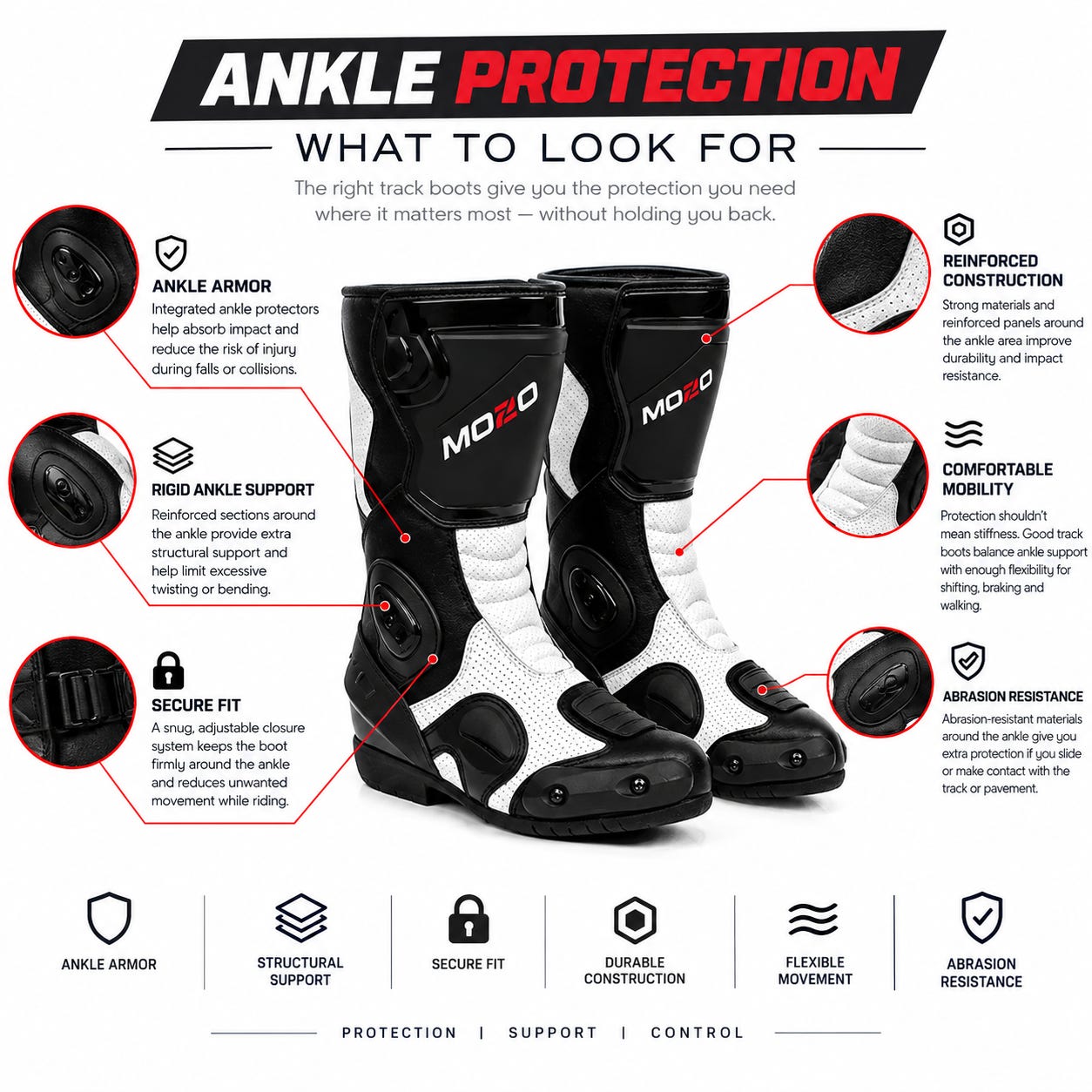
Ankle protection is one of the most important features to consider when choosing track boots. Riders experience significant forces during cornering, braking, and accidental falls, so a well-designed boot should help protect the ankle while still allowing enough movement for precise bike control.
-
Ankle Armor: Look for boots with integrated ankle protectors positioned around the vulnerable sides of the ankle. These can help reduce the impact of knocks and falls.
-
Rigid Ankle Support: Reinforced sections around the ankle can provide additional structural support and help limit excessive twisting or bending.
-
Secure Fit: A snug, adjustable closure system keeps the boot firmly around the ankle and reduces unwanted movement while riding.
-
Reinforced Construction: Strong materials and reinforced panels around the ankle area can improve both durability and impact resistance.
-
Comfortable Mobility: Protection should not make the boot excessively stiff. Good track boots balance ankle support with enough flexibility for shifting, braking, and walking.
-
Abrasion Resistance: Since the ankle can contact the track or pavement during a slide, abrasion-resistant materials around this area provide an additional layer of protection.
When comparing track boots, ankle armor, structural support, secure fit, and abrasion resistance should all be considered together. The best choice is a boot that provides reliable protection without restricting the movements needed for confident track riding.
Armor Placement and Impact Protection
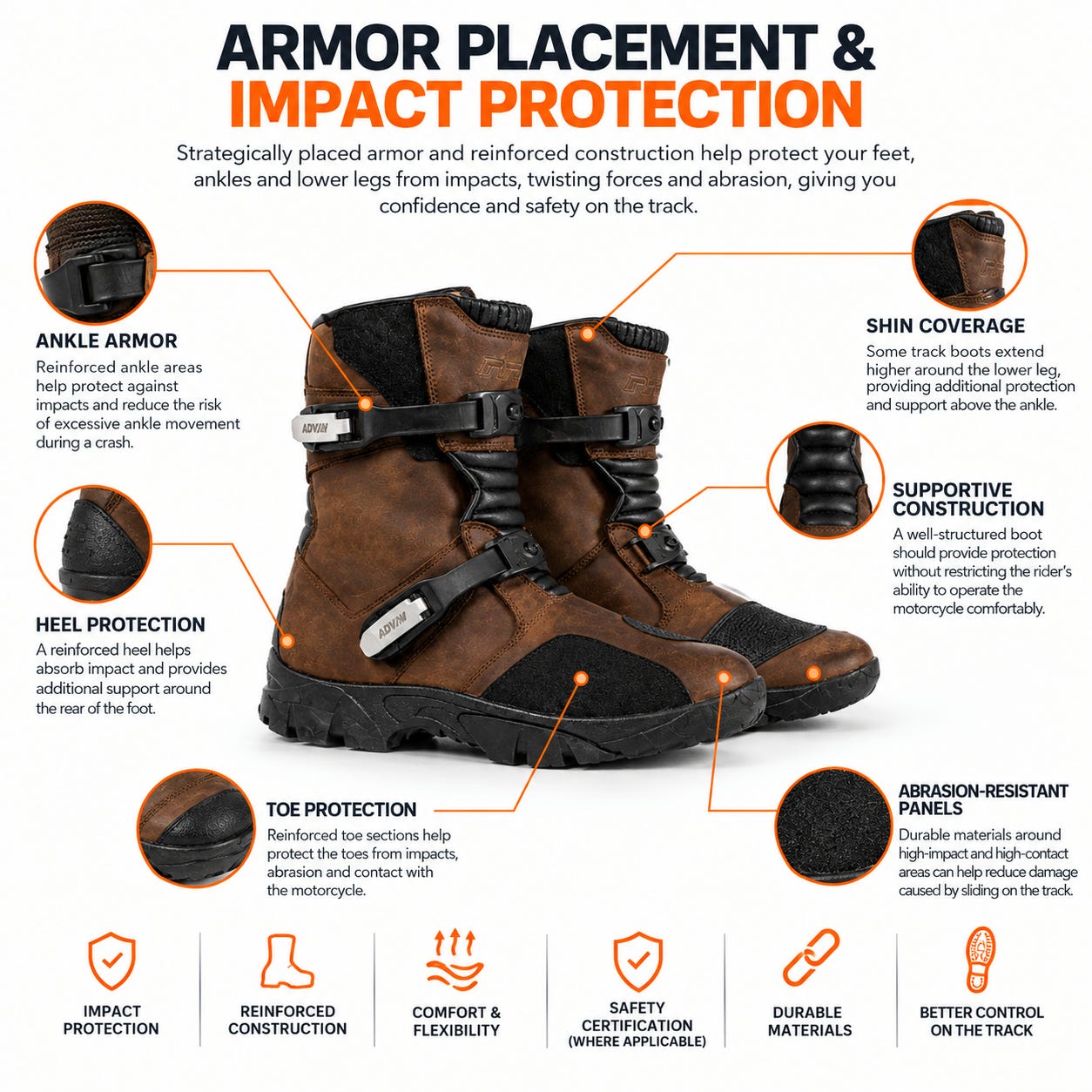
Armor placement is one of the most important factors to consider when choosing track boots. Unlike ordinary footwear, motorcycle track boots are designed to protect vulnerable areas of the foot and ankle that can be exposed to impacts, twisting forces, and contact with the motorcycle or track surface.
-
Ankle Armor: Reinforced ankle areas help protect against impacts and reduce the risk of excessive ankle movement during a crash.
-
Heel Protection: A reinforced heel helps absorb impact and provides additional support around the rear of the foot.
-
Toe Protection: Reinforced toe sections help protect the toes from impacts, abrasion, and contact with the motorcycle.
-
Shin Coverage: Some track boots extend higher around the lower leg, providing additional protection and support above the ankle.
-
Abrasion-Resistant Panels: Durable materials around high-impact and high-contact areas can help reduce damage caused by sliding on the track.
-
Supportive Construction: A well-structured boot should provide protection without restricting the rider’s ability to operate the motorcycle comfortably.
When buying track boots, look for strategically positioned protective components, secure construction, and appropriate safety certification where applicable. Good armor should complement the boot’s flexibility and fit rather than making the boot unnecessarily stiff or uncomfortable.
Sole Grip for Better Control on the Track
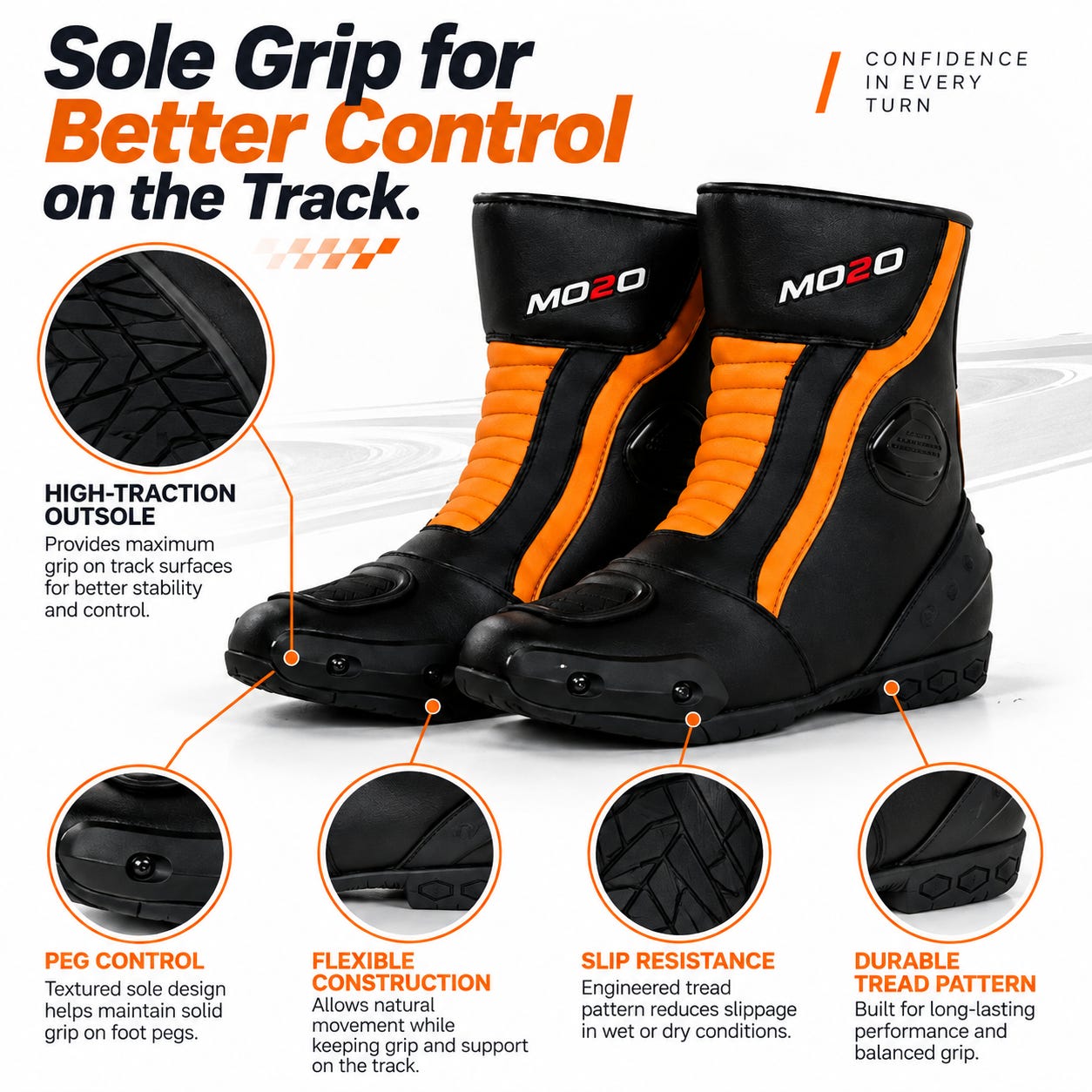
Sole grip is an important feature of track boots because riders need stable footing and precise control when shifting gears, braking, and moving their feet on the motorcycle. A well-designed sole should provide reliable traction without feeling overly stiff or bulky.
-
High-Traction Outsole: Look for soles with a grippy rubber or specialized compound that helps maintain traction on the foot pegs.
-
Peg Control: A properly textured sole can help prevent the foot from sliding during aggressive acceleration, braking, and cornering.
-
Flexible Construction: The sole should offer enough flexibility for natural foot movement while maintaining adequate support and protection.
-
Oil and Slip Resistance: Slip-resistant materials can provide additional stability when walking around the paddock or standing on potentially smooth surfaces.
-
Durable Tread Pattern: A strong tread design helps the sole withstand repeated contact with foot pegs and track surfaces.
-
Balanced Grip: Excessive grip can restrict natural foot repositioning, so the ideal track boot should provide traction while still allowing controlled movement.
Overall, choose track boots with a durable, flexible, and high-traction sole that supports precise foot movements and helps maintain confident control throughout a ride.

How to Choose the Right Track Boots
Choosing the right track boots requires more than looking at their appearance. A good pair should provide a balance of protection, grip, fit, flexibility, and durability to support confident riding on the track.
-
Prioritize Ankle Protection: Look for boots with reinforced ankle areas and supportive construction to help protect against impacts and twisting forces during a crash.
-
Check Armor Coverage: Choose boots with protection around vulnerable areas such as the ankles, toes, heels, and shins. Properly positioned armor can provide additional impact protection without making the boots excessively stiff.
-
Look for Strong Sole Grip: A durable, high-grip sole helps maintain stable contact with the foot pegs, especially during hard braking, acceleration, and cornering.
-
Choose a Secure Fit: Track boots should fit snugly without creating uncomfortable pressure points. Your heel should stay secure, while your toes should have enough room to move naturally.
-
Consider Flexibility: Boots should provide adequate support while still allowing controlled movement of the foot and ankle. Excessively stiff boots can affect comfort and riding feel.
-
Evaluate Construction and Materials: Durable leather or advanced synthetic materials, reinforced stitching, and abrasion-resistant panels can improve the boots’ ability to withstand regular track use.
-
Check the Closure System: Zippers, straps, or other secure fastening systems should keep the boot firmly in place throughout a riding session.
-
Consider Track Compatibility: If you regularly participate in track days or racing, select boots specifically designed for performance riding rather than ordinary motorcycle or casual footwear.
Ultimately, the best track boots are those that fit securely, protect key areas, provide reliable sole grip, and allow enough flexibility for precise bike control.
1. Why are track boots important for motorcycle riding?
Track boots are designed to protect the feet, ankles, and lower legs from impacts, abrasion, twisting forces, and other injuries that can occur during high-speed riding or crashes.
2. What type of ankle protection should track boots have?
Look for boots with reinforced ankle areas, integrated ankle armor, and supportive construction. These features can help reduce the risk of injury while maintaining enough flexibility for comfortable bike control.
3. Where should armor be placed in track boots?
Important protection areas include the ankles, heel, toe box, shin, and sides of the foot. Effective armor placement helps protect vulnerable areas from impacts and abrasion.
4. How does sole grip affect track boot performance?
A grippy sole helps maintain secure contact with the footpeg, especially during braking, cornering, and acceleration. Good traction can improve rider control and confidence.
5. What makes a good track boot sole?
A good sole should provide strong traction, durability, and enough flexibility for controlled foot movement. It should also resist excessive wear from regular contact with motorcycle footpegs.
6. Should track boots be stiff or flexible?
Track boots should provide a balance between support and flexibility. They need enough stiffness to help protect the foot and ankle while allowing the rider to shift gears, operate controls, and move naturally.
7. Are reinforced toe areas necessary in track boots?
Yes. Reinforced toe protection helps shield the toes from impacts and abrasion. A strong toe box is particularly useful during slides or crashes.
8. How should track boots fit?
Track boots should fit securely without causing painful pressure points. The heel should remain stable, the toes should have some comfortable movement, and the ankle should feel supported without being excessively restricted.
9. Can track boots improve rider control?
Yes. A secure fit, supportive ankle construction, and high-traction sole can help riders maintain better contact with the motorcycle and make foot movements more precise.
10. What should I check before buying track boots?
Check the ankle protection, armor coverage, sole grip, toe and heel reinforcement, fit, closure system, durability, and safety certification. Choose a boot that matches your riding style and track requirements.
Choosing the right track boots is an important step toward improving both rider protection and control on the track. Look for boots with strong ankle protection, strategically placed armor, durable construction, and a high-grip sole to help manage impacts, twisting forces, and foot movement. A secure fit is equally important, as properly fitted boots provide stability without restricting natural movement. By prioritizing protection, grip, comfort, and build quality, riders can select track boots that offer reliable performance and confidence during demanding rides.