


When choosing a motorcycle leather jacket, the quality of the armor inside it is just as important as the leather itself. Motorcycle armor is designed to help protect key areas such as the shoulders, elbows, and back during an impact. Two common protection ratings you may come across are CE Level 1 and CE Level 2 armor.
Understanding the difference can help riders choose a jacket that matches their riding style, comfort needs, and desired level of protection.
What Does CE Armor Mean?
CE stands for Conformité Européenne. In motorcycle protective gear, CE certification indicates that the protective equipment has been tested against specific European safety requirements.
CE-rated armor is commonly used in motorcycle jackets, pants, gloves, and other protective riding gear. The rating helps riders understand how effectively the armor can reduce impact forces.
CE Level 1 Armor
CE Level 1 armor provides a basic level of certified impact protection while generally being lighter and more flexible.
It is often preferred by riders who want a balance between protection and comfort, especially for:
-
Everyday street riding
-
Short motorcycle trips
-
Urban commuting
-
Casual touring
-
Warm-weather riding where flexibility matters
Because Level 1 armor typically allows more impact force to be transmitted through the protector than Level 2, riders looking for higher impact protection may prefer Level 2.
CE Level 2 Armor
CE Level 2 armor offers a higher level of impact protection than Level 1. It is designed to transmit less force during an impact when tested under the applicable standard.
Level 2 armor can be a strong choice for:
-
Long-distance touring
-
Highway riding
-
Sport riding
-
Adventure riding
-
Riders who prioritize increased impact protection
The trade-off is that Level 2 protectors can be somewhat thicker, heavier, or less flexible than comparable Level 1 protectors, although modern armor designs continue to improve comfort and flexibility.
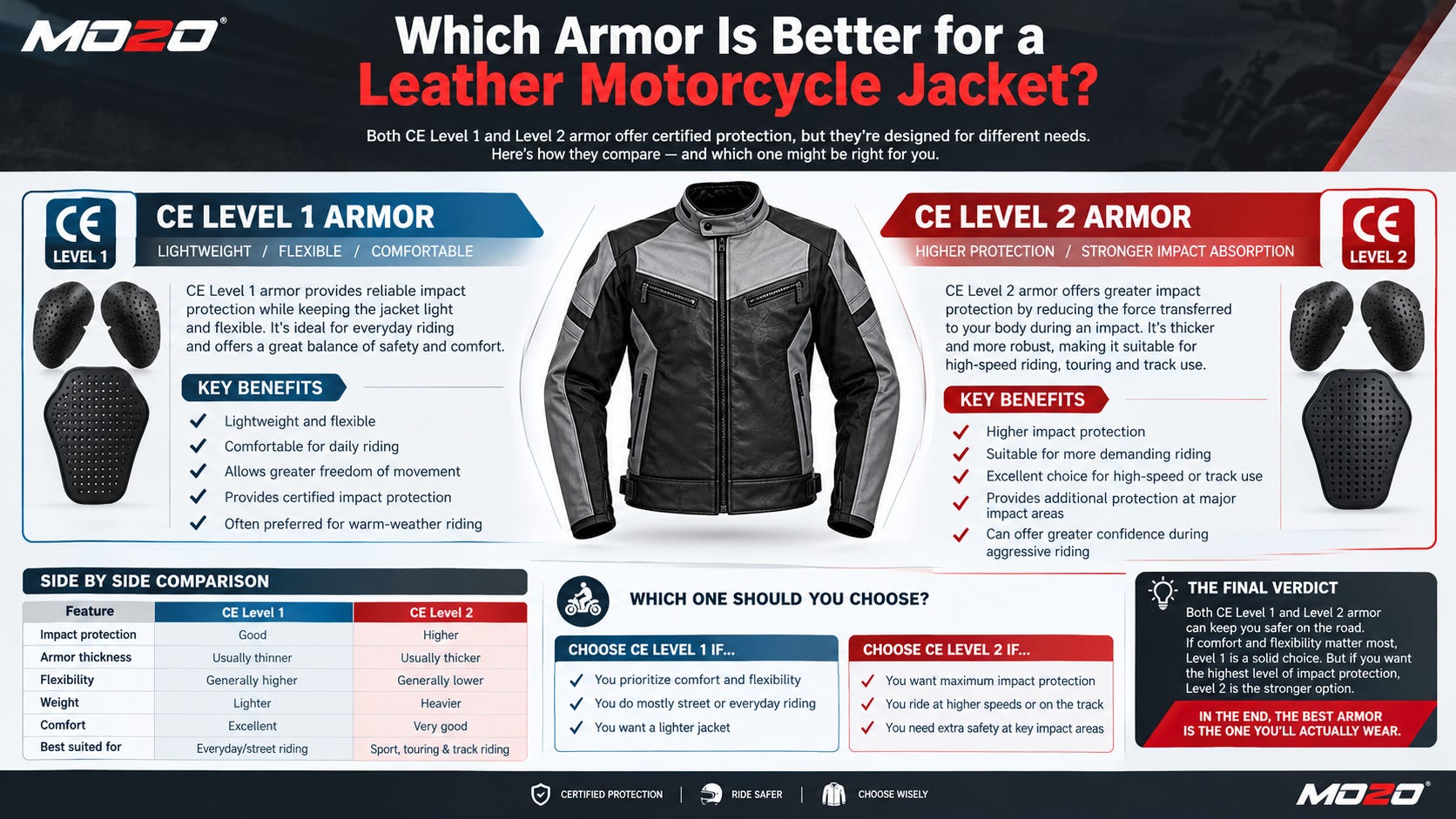
Which Armor Is Better for a Leather Motorcycle Jacket?
Neither level is automatically the right choice for every rider. CE Level 1 can be suitable when lightweight comfort and flexibility are priorities. CE Level 2 is generally the better choice when your priority is reducing impact forces as much as reasonably possible.
For riders who regularly travel at higher speeds or spend extended periods on highways, Level 2 armor can provide an attractive additional layer of protection.
Don’t Forget Back and Chest Protection
Shoulder and elbow armor are important, but riders should also consider protection for the back and chest.
Some leather motorcycle jackets include removable protectors, while others have pockets designed to accept compatible armor upgrades. Before purchasing replacement armor, check that it is compatible with the jacket and certified for the intended use.
Leather + CE Armor: A Better Combination
A leather motorcycle jacket can provide abrasion resistance, while CE-certified armor adds impact protection at important areas of the body. Together, these features can provide a more comprehensive protective setup for motorcycle riding.
However, no motorcycle jacket can eliminate the risk of injury. Proper fit, certified protective equipment, safe riding practices, and appropriate riding conditions all matter.
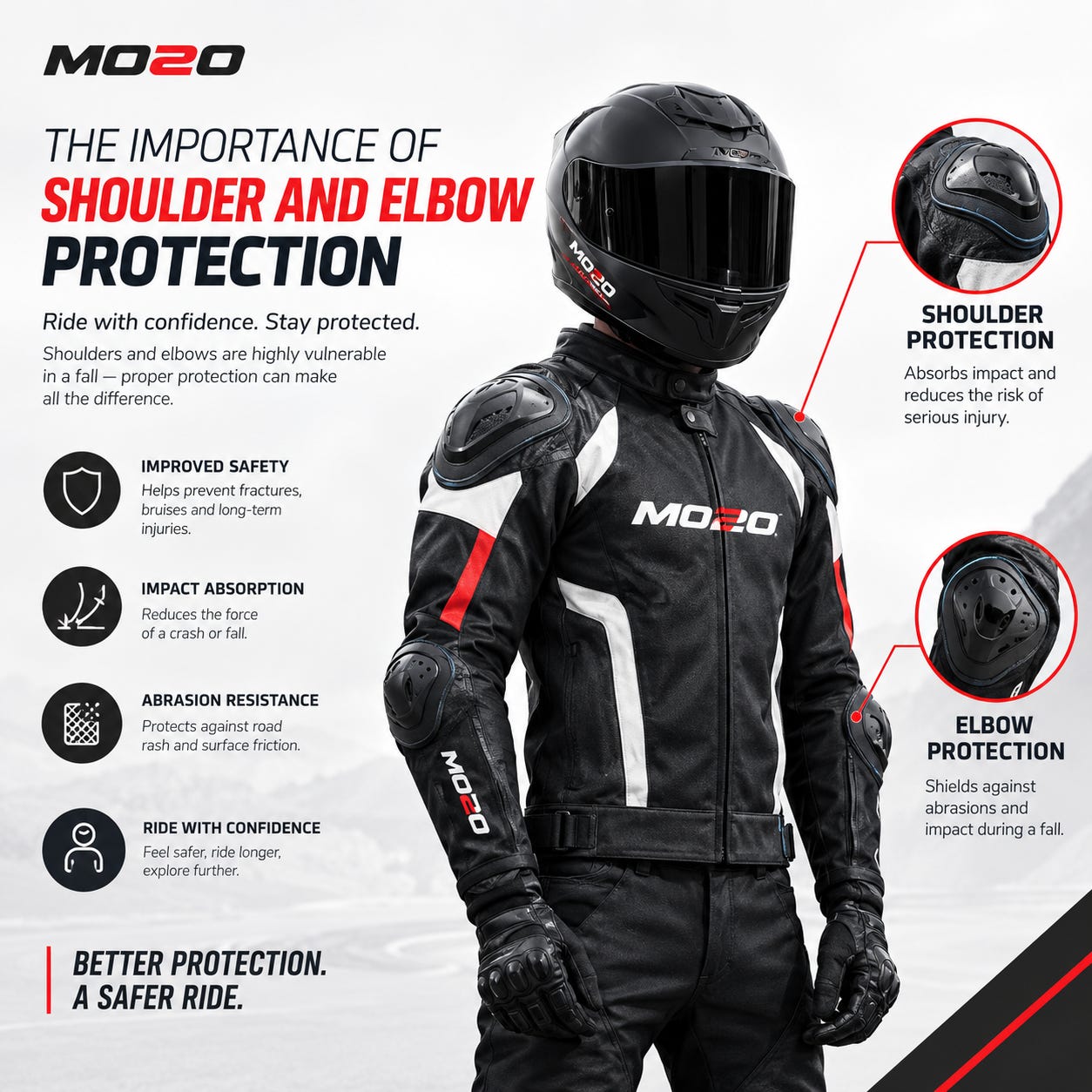
The Importance of Shoulder and Elbow Protection
Shoulder and elbow protection is an important part of a properly designed motorcycle leather jacket. During a motorcycle accident, riders may instinctively use their arms to protect themselves, making these areas particularly important to cover with impact protection.
Shoulder Protection
Shoulder armor is designed to help reduce the force transferred to the shoulder during an impact. Properly fitted armor should sit securely over the shoulder joint and remain in position when you move your arms into a riding posture.
Elbow Protection
Elbow armor helps protect one of the most exposed joints on the arm. It should cover the elbow correctly without restricting normal arm movement. Adjustable or well-fitted armor can help keep the protector in the right position while riding.
Why Proper Positioning Matters
Even high-quality CE-certified armor needs to be positioned correctly to work as intended. A jacket that is excessively loose can allow shoulder or elbow protectors to shift away from the intended protection area.
For this reason, look for a motorcycle jacket with properly positioned, compatible CE-certified shoulder and elbow armor, combined with a secure fit and good freedom of movement.

Tips for Getting the Right Fit and Protection
Choosing the right motorcycle leather jacket is about more than selecting the correct size. A properly fitted jacket helps keep its protective armor positioned correctly while allowing you to ride comfortably.
1. Choose a Snug, Secure Fit
Your jacket should fit close to your body without restricting movement. A jacket that is too loose may allow the armor to move away from the intended protection area during an impact.
2. Check Shoulder and Elbow Armor Position
Make sure the protectors sit directly over your shoulders and elbows. When you move your arms into a normal riding position, the armor should remain securely positioned.
3. Consider Back Protection
If the jacket has a back-protector pocket, check whether it includes compatible CE-certified armor or allows an appropriate protector to be added. Back protection can provide an important additional layer of impact protection.
4. Look for Properly Certified Armor
Check the jacket and armor labels for the relevant CE marking and certification information. Don’t rely solely on marketing terms such as “protective” or “high protection.”
5. Test the Jacket in a Riding Position
Try the jacket while sitting in your normal riding posture. Your sleeves should remain long enough to cover your wrists, and the armor should stay in place when your arms are bent.
6. Balance Protection With Comfort
The most protective jacket is not useful if you cannot comfortably wear it. Choose armor and a jacket that provide appropriate protection while allowing you to move naturally and control your motorcycle comfortably.
The goal is simple: a well-fitting leather motorcycle jacket with correctly positioned, certified armor can help provide better protection without sacrificing everyday riding comfort.

When buying a leather motorcycle jacket, riders sometimes focus mainly on the leather, style, or appearance and overlook the importance of properly fitted armor. Avoiding these common mistakes can help you make a better-informed choice.
1. Choosing Armor Based Only on the Level
CE Level 2 offers a higher level of impact protection than Level 1, but the rating alone isn’t everything. The armor should also fit correctly and be designed for the intended protection area.
2. Wearing a Jacket That Is Too Loose
A loose jacket can allow shoulder and elbow armor to move away from the correct position. Choose a secure fit that keeps the protectors properly positioned while riding.
3. Ignoring Back Protection
Some riders check only the shoulder and elbow armor and forget about the back. Consider whether the jacket includes compatible back protection or has a pocket for adding it.
4. Using Incorrect Replacement Armor
Not every protector fits every jacket. Replacing the original armor with an incompatible protector may affect positioning and coverage. Always check compatibility before upgrading.
5. Sacrificing Protection for Style
A fashionable leather jacket isn’t necessarily designed for motorcycle protection. Look for a jacket specifically designed for riding, with appropriate abrasion resistance and certified impact protectors.
6. Not Checking the Certification
Don’t assume that an armor insert is protective simply because the product description says so. Check the armor’s certification and markings to understand what standard it meets.
7. Forgetting to Check Armor Position
Try the jacket in your normal riding position. Make sure the shoulder and elbow protectors remain securely over the intended areas when your arms are bent.
The best approach is to consider the complete protective system—jacket fit, abrasion resistance, certified armor, coverage, and comfort—rather than focusing on just one feature.

1. What is CE Level 1 armor?
CE Level 1 armor is certified impact protection designed to reduce the force transmitted to the body during an impact. It is commonly used in motorcycle jackets for everyday riding.
2. What is CE Level 2 armor?
CE Level 2 armor provides a higher level of impact protection than CE Level 1 by limiting the amount of force transmitted through the protector during testing.
3. Is CE Level 2 better than Level 1?
Generally, yes, when maximum impact protection is the priority. However, Level 1 may offer advantages in terms of flexibility, weight, and comfort.
4. Which CE armor is best for street riding?
CE Level 1 can be a practical choice for everyday urban riding, while Level 2 may be preferable for riders who frequently ride at higher speeds or want additional impact protection.
5. Is CE Level 2 armor suitable for touring?
Yes. Level 2 armor can be a good option for long-distance and highway touring because it provides a higher level of impact protection.
6. Do leather motorcycle jackets need CE armor?
Leather can provide abrasion resistance, but certified impact armor adds protection for areas such as the shoulders, elbows, and back. A motorcycle-specific leather jacket should ideally combine both.
7. Should I choose CE Level 1 or Level 2 shoulder and elbow armor?
Your choice depends on your riding priorities. Level 1 can provide a lighter and more flexible setup, while Level 2 offers a higher level of impact protection.
8. Can CE Level 1 armor be replaced with Level 2?
It may be possible if the jacket has compatible armor pockets and the replacement protectors are suitable for that jacket. Always check compatibility before making a replacement.
9. Does thicker armor always mean better protection?
Not necessarily. Protection depends on the armor’s design, certification, impact performance, coverage, and correct positioning—not simply its thickness.
10. How should motorcycle jacket armor fit?
Armor should sit securely over the intended body area and remain correctly positioned when you’re in a normal riding position. A properly fitted jacket helps keep the protectors where they are designed to provide protection.

Choosing between CE Level 1 and CE Level 2 armor ultimately comes down to your riding needs and protection priorities. Level 1 can provide a practical balance of protection, flexibility, and comfort for everyday street riding, while Level 2 offers a higher level of impact protection for riders who want additional protection. When choosing a leather motorcycle jacket, don’t focus only on the CE level. Consider the jacket’s fit, armor positioning, shoulder and elbow coverage, back protection, certification, abrasion resistance, and overall comfort. A well-fitted leather jacket with correctly positioned, certified armor can give riders greater confidence while maintaining the comfort and freedom of movement needed on the road.


