


What Are Moto Boots?
Moto boots, short for motorcycle boots, are specialized footwear designed to protect a rider’s feet and lower legs while providing comfort and stability during riding. Unlike regular footwear, moto boots are built with durable materials and protective features to help reduce the risk of injuries from impacts, abrasions, weather, and accidental contact with the motorcycle or road.
Most motorcycle boots feature reinforced areas around the ankles, toes, heels, and shins. Many also include secure closures, sturdy soles, and impact-resistant protection. Depending on their design, they may be made for everyday riding, touring, adventure riding, or racing.
A proper fit is especially important. Moto boots should feel secure without restricting movement, and they should stay firmly in place while riding. Choosing boots with appropriate protection, durable construction, and good grip can improve both safety and riding confidence.
In short, moto boots are more than ordinary footwear—they are an important part of a rider’s protective gear, combining safety, durability, comfort, and motorcycle-specific performance.
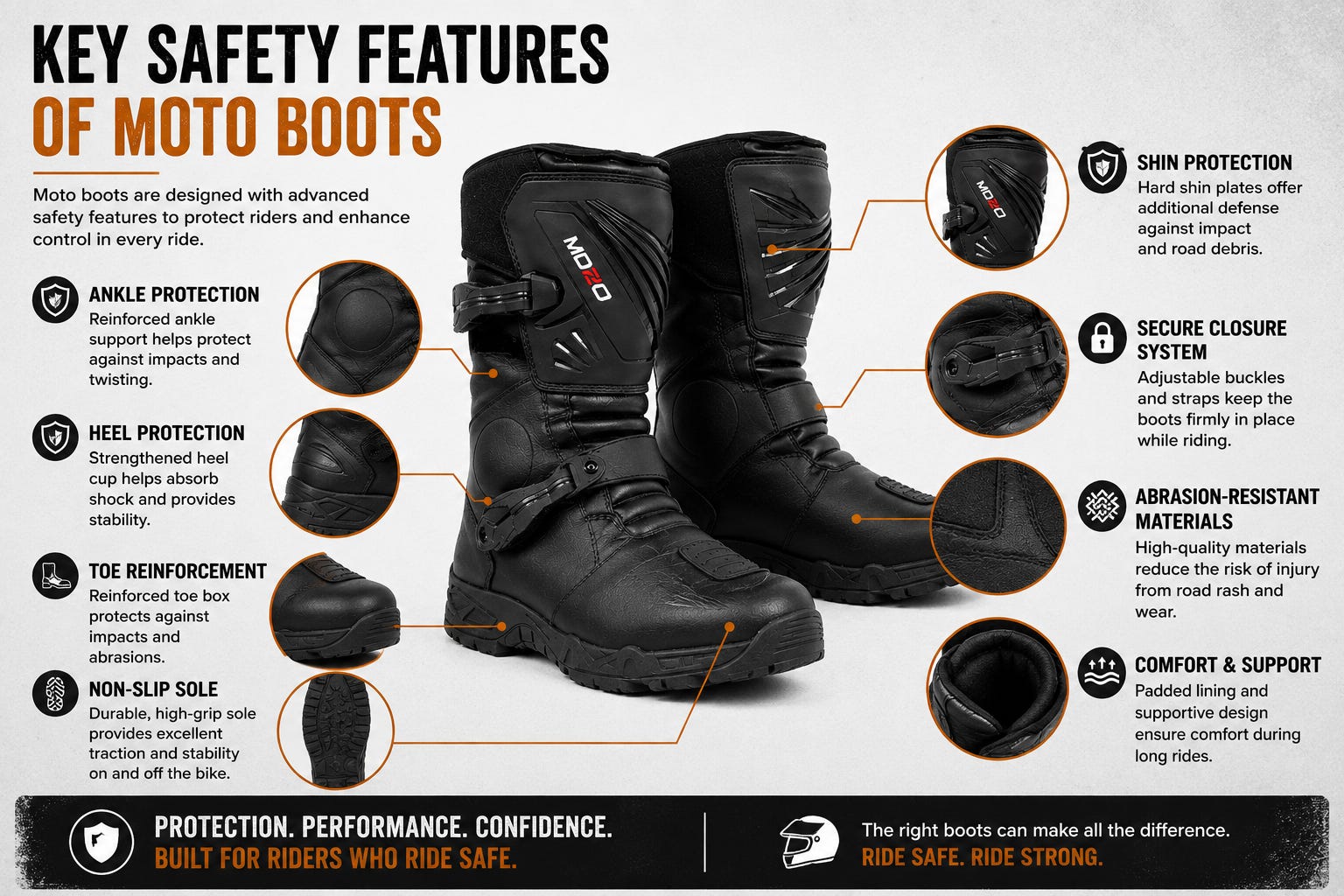
Key Safety Features of Moto Boots
Moto boots are designed with specialized safety features that provide greater protection than ordinary footwear. While features vary by style and riding purpose, several key elements are commonly found in quality motorcycle boots.
-
Ankle Protection: Reinforced or impact-resistant ankle areas help protect against knocks, twisting, and impacts during a fall.
-
Toe Reinforcement: Strengthened toe boxes provide additional protection from impacts and abrasion.
-
Heel Protection: A reinforced heel helps support and protect the back of the foot during accidents.
-
Abrasion-Resistant Materials: Durable leather or technical materials can help reduce skin exposure to road abrasion.
-
Secure Closures: Laces, buckles, zippers, or hook-and-loop systems help keep the boots firmly in place while riding.
-
Strong, Non-Slip Soles: Sturdy soles provide grip and stability when standing on footpegs or stopping the motorcycle.
-
Shin Protection: Some taller motorcycle boots include reinforced shin sections for additional lower-leg coverage.
-
Protective Construction: Structured designs help maintain the boot’s shape and provide better support during riding.
Different Types of Moto Boots
Moto boots come in different styles, each designed to suit specific riding needs and preferences. Choosing the right type depends on your riding style, level of protection required, comfort, and the conditions in which you usually ride.
1. Racing Moto Boots
Racing boots are designed for sport and track riding. They typically feature reinforced construction, ankle and shin protection, strong soles, and additional protective elements designed for aggressive riding.
2. Touring Motorcycle Boots
Touring boots focus on a balance of protection and long-distance comfort. They are often designed with durable materials and weather-resistant features, making them suitable for extended rides and changing conditions.
3. Adventure Moto Boots
Adventure boots are built for riders who travel on both paved and unpaved surfaces. They generally offer sturdy construction, enhanced ankle protection, strong soles, and resistance to mud, water, and rough riding conditions.
4. Motorcycle Riding Shoes
Motorcycle riding shoes have a lower-profile design and often look more like casual footwear. They can be convenient for urban riding while still incorporating motorcycle-specific protection around areas such as the toes and ankles.
The best moto boot depends on your type of riding, desired protection, fit, comfort, and riding environment.
How to Choose the Right Moto Boots
Choosing the right moto boots is important for both rider protection and comfort. The best pair should match your riding style, provide a secure fit, and offer suitable protection for the conditions you ride in.
1. Consider Your Riding Style
Choose boots based on how you ride. Racing boots are suited to track and sport riding, while touring and adventure boots are better for long-distance or mixed-terrain journeys. For everyday city riding, motorcycle riding shoes or shorter boots may be more practical.
2. Look for Protective Features
Check for protection around the ankles, toes, heels, and shins. Reinforced construction and abrasion-resistant materials can provide additional protection in the event of an accident.
3. Choose the Right Fit
Moto boots should fit securely without being painfully tight. Your heel should remain stable, your toes should have enough room to move, and the boot should not shift excessively while walking or riding.
4. Check the Sole and Grip
A sturdy, slip-resistant sole can provide better stability on footpegs and when putting your feet on the ground. Look for a sole that offers good traction without compromising comfort.
5. Consider Weather Protection
If you regularly ride in rain or cold conditions, consider boots with water-resistant or waterproof construction. For hot weather, breathable materials and ventilation can help improve comfort.
6. Prioritize Quality and Durability
Look for strong stitching, durable materials, secure closures, and well-constructed protective areas. A quality pair of moto boots should be able to handle regular riding without quickly losing its shape or protective features.
Materials Used in Moto Boot Construction
Moto boots are made from a variety of materials chosen for durability, protection, comfort, and weather resistance. The materials used can vary depending on whether the boots are designed for racing, touring, adventure riding, or everyday motorcycle use.
1. Full-Grain Leather
Leather is one of the most commonly used materials in motorcycle boots. It offers durability and good abrasion resistance while providing a traditional riding-boot appearance.
2. Synthetic Materials
Modern moto boots may use materials such as synthetic leather, microfiber, or other technical textiles. These materials can provide durability while helping reduce weight and improve flexibility.
3. Reinforced Protective Materials
Protective sections around the toes, ankles, heels, and shins may incorporate reinforced materials or impact-resistant components to provide additional protection.
4. Rubber Soles
Durable rubber is commonly used for motorcycle boot soles because it can provide grip, stability, and resistance to everyday wear.
5. Textile and Mesh Materials
Some boots use technical textiles or mesh panels to improve airflow and flexibility, particularly for warm-weather riding.
6. Waterproof and Breathable Membranes
Certain touring and adventure boots include specialized membranes designed to help keep water out while allowing moisture vapor to escape, improving comfort during changing weather.

Pros
-
Enhanced Protection: Reinforced areas can help protect the toes, ankles, heels, and shins from impacts and abrasion.
-
Better Grip: Durable, non-slip soles provide stability on footpegs and when standing on different surfaces.
-
Secure Fit: Buckles, straps, zippers, or other closures help keep the boots firmly in place.
-
Durability: Quality materials are designed to withstand regular riding and demanding conditions.
-
Weather Protection: Some moto boots offer water-resistant or waterproof construction for wet conditions.
-
Rider Confidence: Proper motorcycle footwear can provide greater comfort and confidence while riding.
Cons
-
Can Feel Heavier: Protective construction may make moto boots heavier than regular shoes.
-
Less Flexible: Reinforced materials can limit flexibility compared with everyday footwear.
-
Higher Cost: Specialized motorcycle boots may cost more than ordinary shoes.
-
Break-In Period: Some leather or heavily reinforced boots may require time to become comfortable.
-
Limited Everyday Style: Certain racing and adventure boots may not be practical for casual daily wear.

Are moto boots necessary for motorcycle riding?
Moto boots are strongly recommended because they provide protection and support that ordinary footwear generally does not offer.
What parts of the foot do moto boots protect?
Depending on the design, moto boots can provide protection around the toes, ankles, heels, and shins, along with additional abrasion resistance.
Can I wear regular shoes instead of moto boots?
Regular shoes are not designed specifically for motorcycle riding and usually provide less protection. Purpose-built moto boots are a safer choice when riding.
Should moto boots be tight or loose?
They should have a secure and comfortable fit. Your foot should not slide around inside the boot, but the boots should not cause painful pressure or restrict circulation.
Are all moto boots waterproof?
No. Waterproofing depends on the specific boot. If you frequently ride in wet weather, look for boots specifically designed with water-resistant or waterproof construction.
How long do moto boots last?
Their lifespan depends on materials, riding frequency, maintenance, and exposure to weather. Regularly inspecting the soles, closures, stitching, and protective components can help determine when replacement is needed.

Moto boots are an important part of motorcycle protective gear, offering a combination of protection, durability, grip, stability, and comfort. Although they can be heavier and less flexible than regular shoes, their specialized construction makes them better suited to the demands of motorcycle riding. Choosing a pair that matches your riding style and fits properly can help provide better protection and confidence on every ride.


