


How to Waterproof Non-Waterproof Track Boots for Rainy Days
Track boots are designed primarily for protection, stability, and performance rather than waterproofing. Many racing and track boots use ventilation panels, perforated materials, and protective openings that allow water to enter during heavy rain. If you own non-waterproof track boots, you can still improve their resistance to rain with the right preparation and maintenance.
Why Waterproofing Track Boots Matters
Riding in wet conditions can expose your feet to rain, road spray, and puddles. Wet boots can become uncomfortable, heavier, and more difficult to dry properly. Moisture can also affect leather, stitching, adhesives, and other boot materials over time.
Waterproofing does not turn a non-waterproof track boot into a fully waterproof boot, but it can provide useful protection against light to moderate rain.
1. Clean the Boots Before Waterproofing
Always start with clean and dry boots. Dirt and road grime can prevent waterproofing products from bonding properly with the outer material.
-
Remove loose dirt with a soft brush.
-
Wipe the boots with a slightly damp cloth.
-
Avoid soaking the boots in water.
-
Allow them to dry naturally before applying any treatment.
-
Remove removable insoles if possible and clean them separately.
Never apply waterproofing products while the boots are wet unless the product specifically allows it.
2. Choose the Right Waterproofing Product
Select a waterproofing spray or treatment designed specifically for the boot’s material. Leather, synthetic leather, textile, and suede may require different products.
Look for products labeled for:
-
Motorcycle boots
-
Leather footwear
-
Synthetic footwear
-
Textile footwear
-
Outdoor or technical footwear
Avoid using household oils, petroleum-based products, or unapproved chemicals. These can damage certain materials, weaken adhesives, or affect the boot’s appearance and protective components.
3. Apply a Waterproofing Spray
Once the boots are clean and dry, apply a suitable waterproofing spray evenly over the exterior.
Hold the spray at the distance recommended by the manufacturer and cover the material with a light, consistent layer. Pay particular attention to exposed areas such as the toe box, heel, ankle sections, and seams.
Do not excessively saturate the boots. Multiple light applications are generally preferable to one heavy coating.
4. Pay Attention to Seams and Stitching
Water can enter through seams and stitching even when the main boot material has some water resistance.
A compatible seam-sealing product may help reduce water penetration around vulnerable areas. However, do not cover ventilation openings, drainage areas, buckles, zippers, or moving protective mechanisms unless the manufacturer specifically recommends doing so.
5. Protect the Zippers and Closures
Track boots often use zippers, hook-and-loop closures, buckles, or other fastening systems. These areas can become potential entry points for water.
Keep zippers clean and properly closed before riding. If the manufacturer recommends a specific zipper treatment or lubricant, use only that product. Avoid products that could interfere with the zipper’s operation or damage surrounding materials.
6. Let the Treatment Cure Properly
After waterproofing, allow the boots to dry and cure according to the product instructions. Do not immediately expose freshly treated boots to heavy rain if the treatment requires curing time.
Keep the boots in a cool, well-ventilated area away from direct sunlight, heaters, hair dryers, or open flames.
Excessive heat can deform materials, damage adhesives, and affect protective components.
7. Use External Rain Protection
For heavy rain, waterproofing treatment alone may not be enough. Waterproof motorcycle boot covers can provide an additional barrier against rain and road spray.
This is particularly useful when riding for long periods in wet weather. Choose covers that fit securely and do not interfere with the motorcycle’s controls, footpegs, or the boot’s protective mechanisms.
8. Test the Boots Before a Rainy Ride
Before relying on your treated boots during a long ride, perform a simple water-resistance test.
Place a small amount of water on the exterior surface and observe whether it beads up or quickly absorbs into the material. This is only a basic indication of surface resistance—not proof that the boots are completely waterproof.
For motorcycle riding, also check that all closures are functioning correctly and that the waterproofing treatment has not affected the boot’s flexibility or operation.
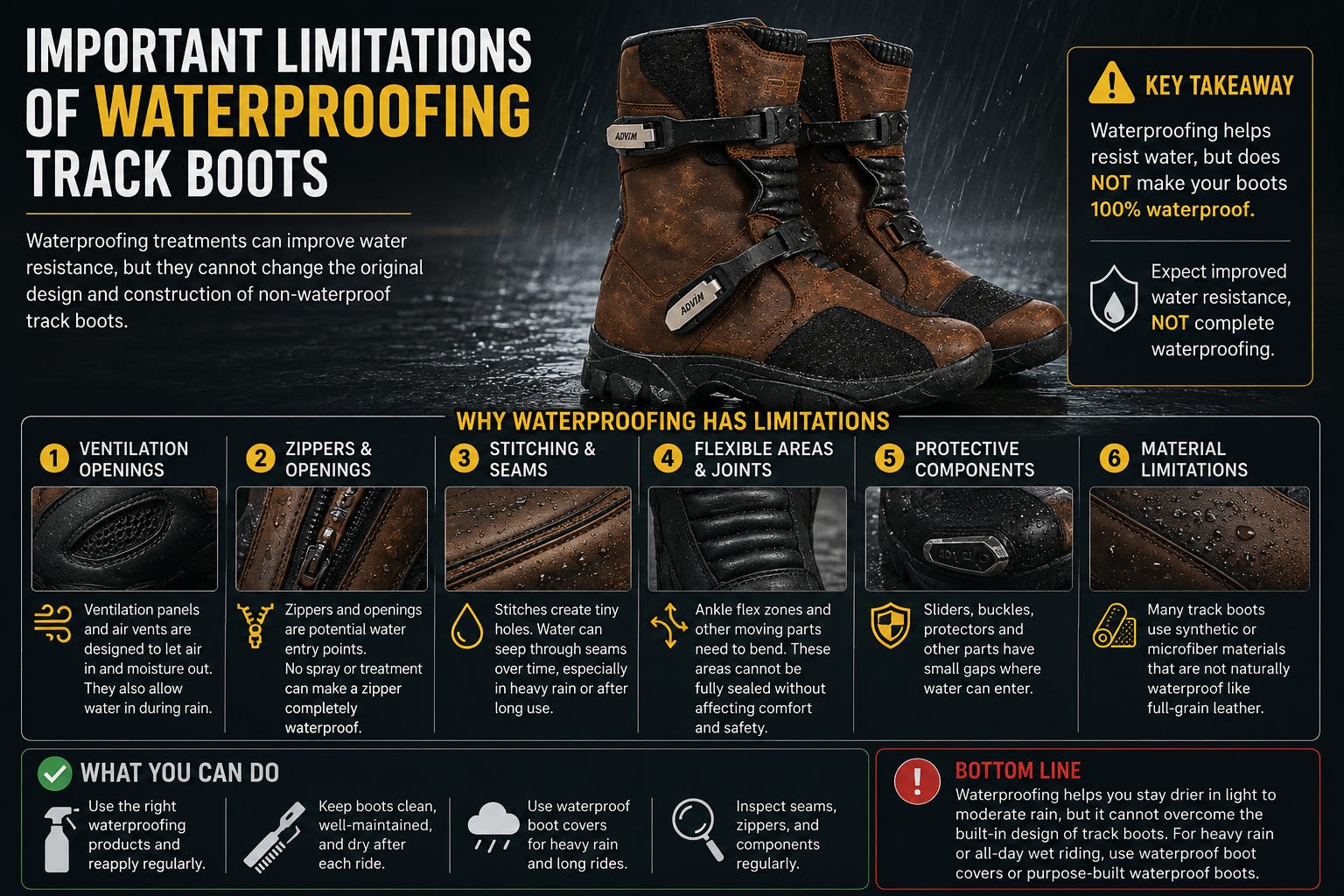
Important Limitations of Waterproofing Track Boots
It is important to understand that aftermarket waterproofing cannot completely change the original construction of a track boot.
Many track boots have:
-
Perforated ventilation areas
-
Breathable panels
-
Large zipper openings
-
Flexible joints
-
Protective sliders
-
Articulated ankle systems
These features can make complete waterproofing difficult. If you frequently ride in heavy rain, a purpose-built waterproof motorcycle boot may be a better long-term solution.
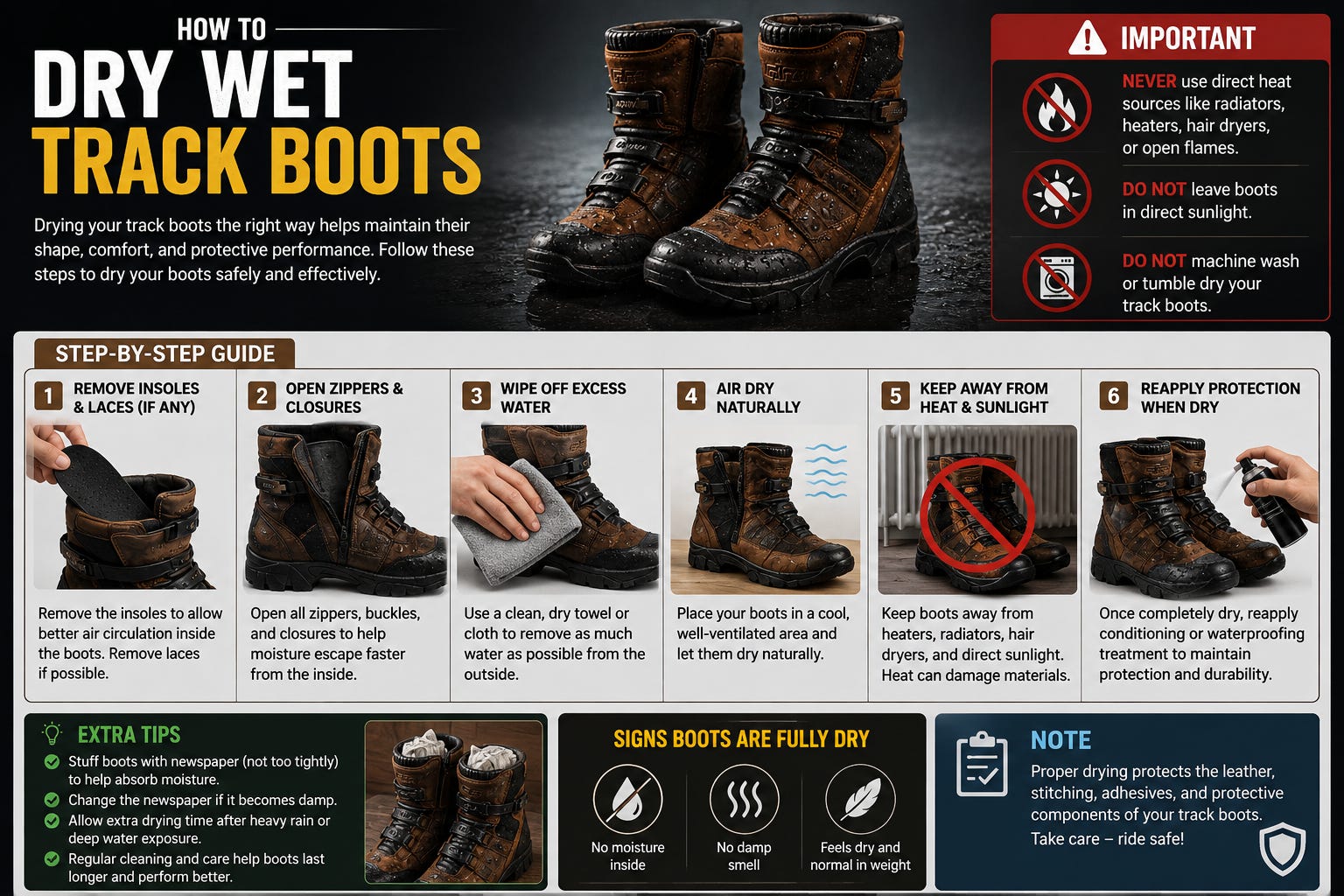
How to Dry Wet Track Boots
If your boots become soaked, dry them carefully.
-
Remove the insoles if possible.
-
Open the zippers and closures.
-
Wipe away excess water.
-
Place the boots in a well-ventilated area.
-
Allow them to dry naturally.
-
Reapply an appropriate conditioning or waterproofing treatment when necessary.
Avoid placing motorcycle boots directly against radiators or using high heat. Rapid drying can cause leather and synthetic materials to crack, shrink, deform, or lose their original properties.

Tips for Waterproofing Non-Waterproof Track Boots for Rainy Days
-
Clean before waterproofing: Remove dirt, dust, and grime so the treatment can properly adhere to the boot material.
-
Choose the right product: Use a waterproofing spray or treatment specifically made for the boot’s material, such as leather, synthetic leather, or textile.
-
Apply light, even coats: Spray evenly over the exterior instead of heavily soaking the boots. Follow the product instructions for the correct distance and drying time.
-
Focus on seams: Pay extra attention to stitching and seams, as these areas can allow water to enter more easily.
-
Do not block ventilation: Avoid applying products over breathable or perforated panels because they are designed to allow airflow.
-
Protect zippers and closures: Keep zippers, buckles, and fastening systems clean and properly closed when riding in rain.
-
Allow proper drying: Let treated boots dry naturally in a cool, well-ventilated area. Avoid radiators, heaters, hair dryers, and direct sunlight.
-
Use boot covers in heavy rain: Waterproof covers provide an additional barrier when riding through prolonged or heavy rainfall.
-
Test before riding: Check the treatment on a small area first and test water resistance before relying on the boots during a long ride.
-
Reapply when needed: Waterproofing wears down with use, cleaning, and exposure to rain, so reapply according to the product manufacturer’s instructions.
-
Inspect regularly: Check for cracked materials, loose stitching, damaged zippers, or separated soles. Waterproofing cannot repair structural damage.
-
Know the limitation: Waterproofing can improve water resistance, but it does not turn non-waterproof track boots into fully waterproof boots. For frequent heavy-rain riding, purpose-built waterproof motorcycle boots are the better option.

Common Mistakes to Avoid
Using the wrong waterproofing product: A product suitable for leather may not be appropriate for synthetic or textile materials.
Blocking ventilation: Do not seal ventilation holes simply to prevent rain. These openings may be important for comfort and temperature management.
Over-applying spray: More waterproofing product does not necessarily mean better protection.
Using household chemicals: Oils, waxes, solvents, and other unapproved substances can damage boot materials.
Ignoring damaged areas: Cracks, loose stitching, damaged zippers, or separated soles should be repaired rather than simply covered with waterproofing spray.
Waterproofing vs. Buying Waterproof Motorcycle Boots
Waterproofing non-waterproof track boots can be useful for occasional rainy rides, but it has limitations. If wet-weather riding is a regular part of your routine, dedicated waterproof motorcycle boots generally provide more reliable protection because waterproof construction is incorporated into the boot from the beginning.
For occasional rain, however, a combination of proper waterproofing treatment, careful maintenance, and external rain covers can significantly improve the practicality of non-waterproof track boots.

Can I make non-waterproof track boots completely waterproof?
Usually, no. Waterproofing treatments can improve water resistance, but they cannot completely seal every opening or ventilation feature found on many track boots.
How often should I waterproof motorcycle boots?
The frequency depends on how often you ride, how much rain the boots encounter, and the waterproofing product used. Follow the product manufacturer’s instructions and reapply when water stops beading effectively on the exterior.
Can I waterproof leather track boots?
Yes, provided you use a waterproofing product specifically designed for the type of leather. Always check the manufacturer’s care instructions first.
Can I use waterproofing spray on synthetic track boots?
Some sprays are designed for synthetic materials, but not all products are compatible. Check the product label before application and test it on a small inconspicuous area if recommended.
Are waterproof boot covers worth using?
Yes. Boot covers can provide an additional layer of protection during heavy rain, especially when the original track boots were designed primarily for dry-weather performance.

Waterproofing non-waterproof track boots can help riders prepare for unexpected rain and occasional wet-weather trips. Cleaning the boots, selecting a compatible waterproofing treatment, protecting vulnerable areas, and allowing the treatment to cure properly are important steps.
However, waterproofing treatment has limits. Track boots are engineered primarily for motorcycle protection and performance, so riders who regularly face heavy rain may benefit more from purpose-built waterproof motorcycle boots or reliable external rain covers.


